Of Japan’s inherited-ataxia families
20%
carry DRPLA






2Mark, Attention Span, 2023: office workers held one screen 150 s in 2004, 47 s in 2016–2021. The nine headlines, all before ChatGPT (November 2022): Carr, The Atlantic, July/August 2008 cover story, “Is Google Making Us Stupid? What the Internet Is Doing to Our Brains.” Ophir, Nass & Wagner, PNAS 2009 (Stanford News, 24 Aug 2009, “Media multitaskers pay mental price”): about 100 students; heavy media multitaskers worse at filtering distraction, task switching and memory control. Ward et al., J. Assoc. Consumer Research 2017 (UT News, 26 Jun 2017): nearly 800 participants; a phone on the desk, even off, lowered available working-memory capacity. Wu, New York Times, Feb 2018, “The Tyranny of Convenience.” Ra et al., JAMA, 17 Jul 2018: 2,587 Los Angeles adolescents followed two years; ADHD symptoms in 4.6% of those with no high-frequency media use vs 10.5% of those with 14 high-frequency activities; association, not causation. Wolf, The Guardian, 25 Aug 2018, “Skim reading is the new normal. The effect on society is profound.” Twenge & Campbell, Preventive Medicine Reports 2018: 40,337 US children and adolescents, ages 2–17; past 1 h/day, more screen time associated with less curiosity, lower self-control, more distractibility (correlational). Madigan et al., JAMA Pediatrics, Jan 2019: 2,441 children; more screen time at 24 and 36 months, lower developmental-screening scores at 36 and 60 months. Gallup, 10 Jan 2022: 12.6 books read in 2021, 15.6 in 2016; the lowest since Gallup first asked in 1990.
3The speaker’s framing, said as hers, not a statistic: humans became the apex predator by thinking, anticipating, coordinating and acting, not by strength.
4The speaker’s framing, said as hers: the five capacities; not a statistic.
5The speaker’s question.
6Gog (Herbert L. Strock, 1954), the trailer embedded from YouTube: “the machine that became the master.” Robot Monster (1953, public domain) plays as the offline fallback.
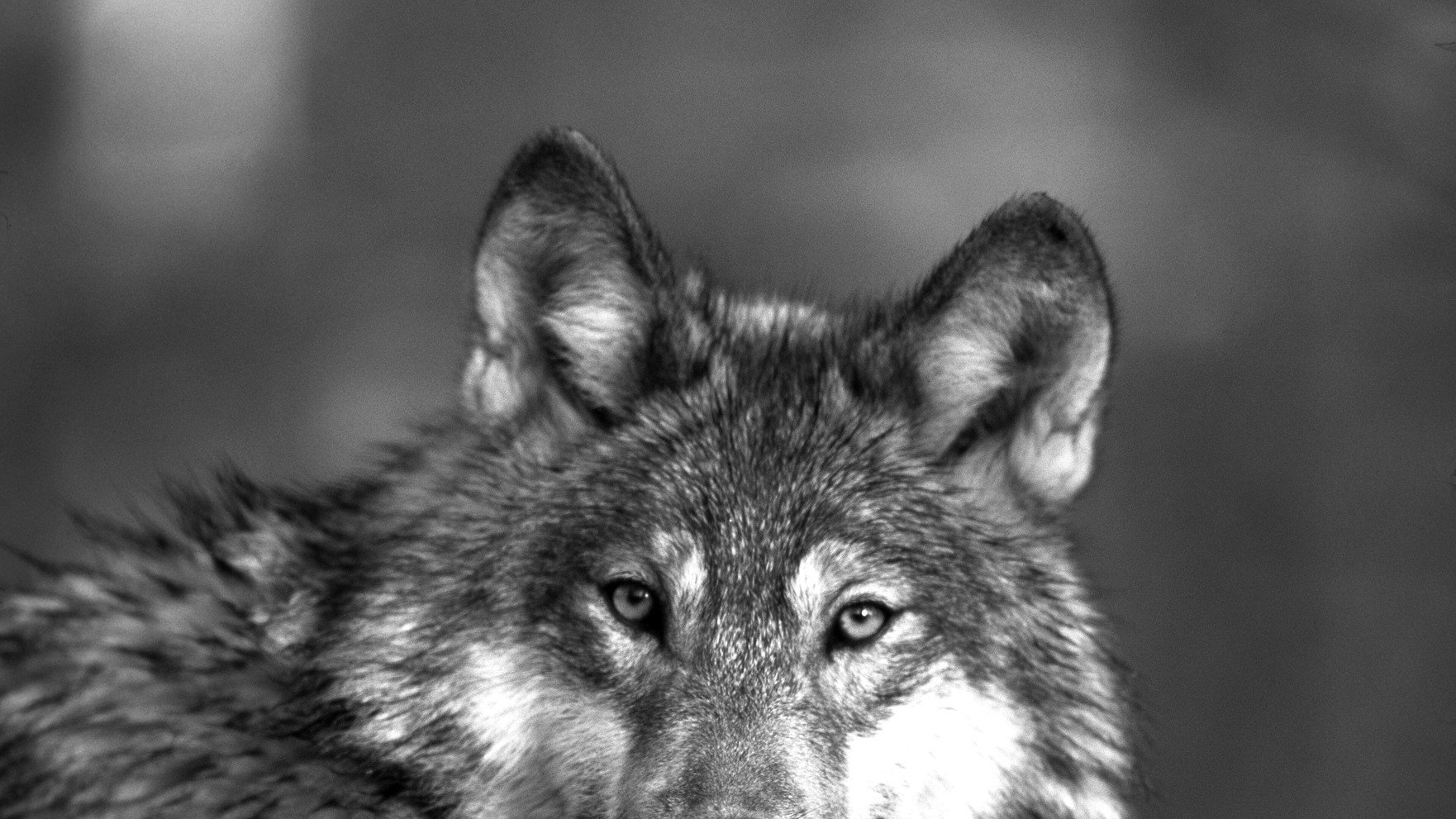
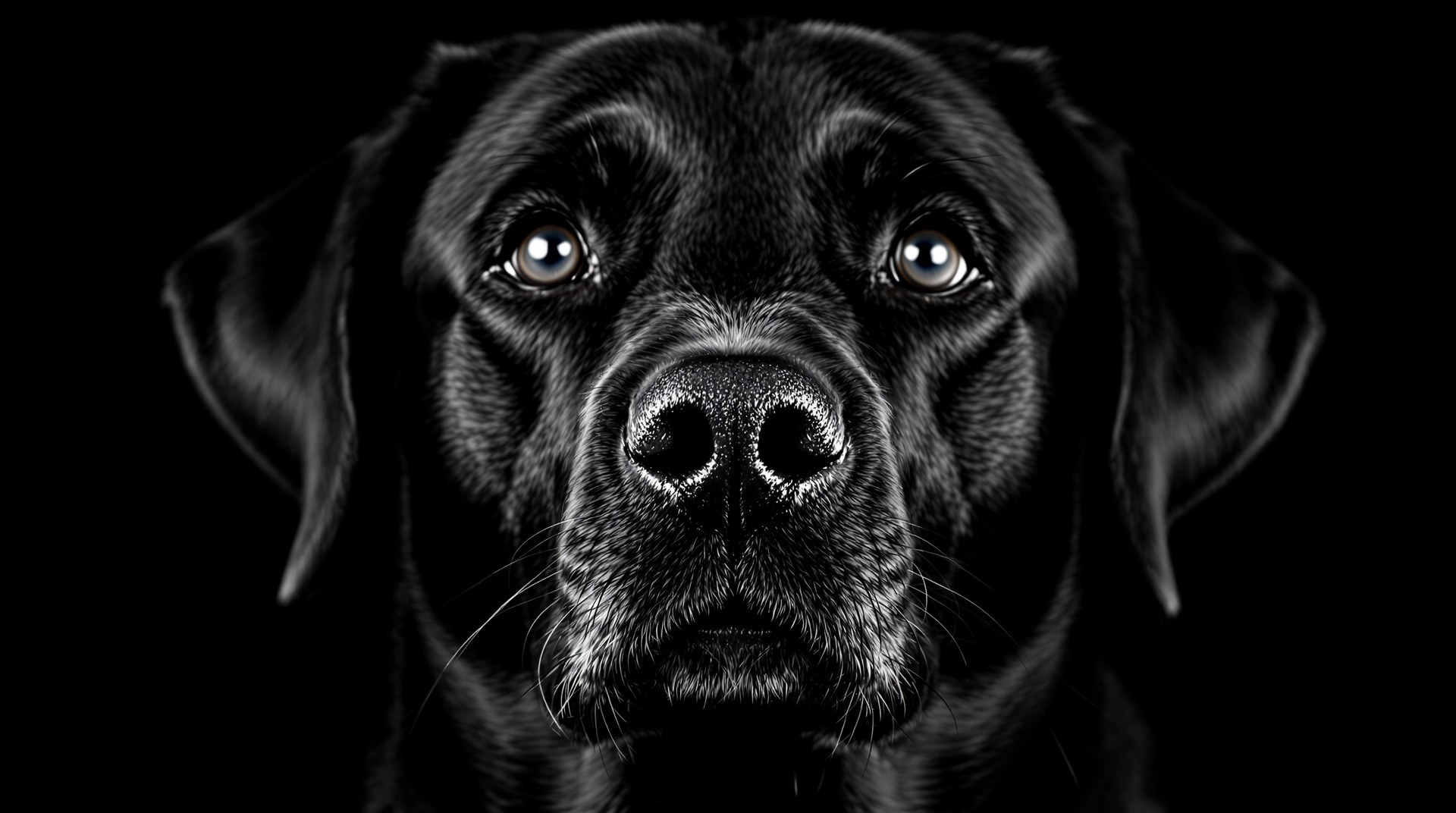
9Balcarcel et al., Proc R Soc B 2021 (dairy cattle −31% brain for body size against the aurochs; the most handled breeds smallest) and J Exp Zool B 2022; Kruska, Brain Behav Evol 2005 (dogs −29%). Estimates vary by method; mostly fear and the senses shrink.
10Trut, American Scientist 1999: by the tenth generation 18% of pups sought human contact; by the twentieth, 35%.
11Heijmans et al., PNAS 2008: 60 people exposed to the Dutch famine around conception, compared with same-sex siblings, carried less methylation on the IGF2 gene about six decades later. Dias & Ressler, Nature Neuroscience 2014: mice conditioned to fear an odor passed the sensitivity to their offspring and grand-offspring through sperm. “Written onto your genes” means marks on the DNA (methylation), not a change in the sequence; the human grandchild evidence is thinner than the mouse evidence, which is why the third ring is dashed.
12Miklósi et al., Curr Biol 2003; Marshall-Pescini et al., Sci Rep 2017: on an unsolvable box, dogs give up sooner and look at the human sooner and longer than wolves raised the same way. Lee et al., CHI 2025: 319 knowledge workers, 936 tasks; critical thinking effort fell as confidence in the AI rose (self-report).
13Maier & Seligman, Psychol Rev 2016: the passivity was never learned; control is learned by a prefrontal circuit that detects that outcomes depend on actions. Rat circuitry; the 1967 dog experiments, read again.
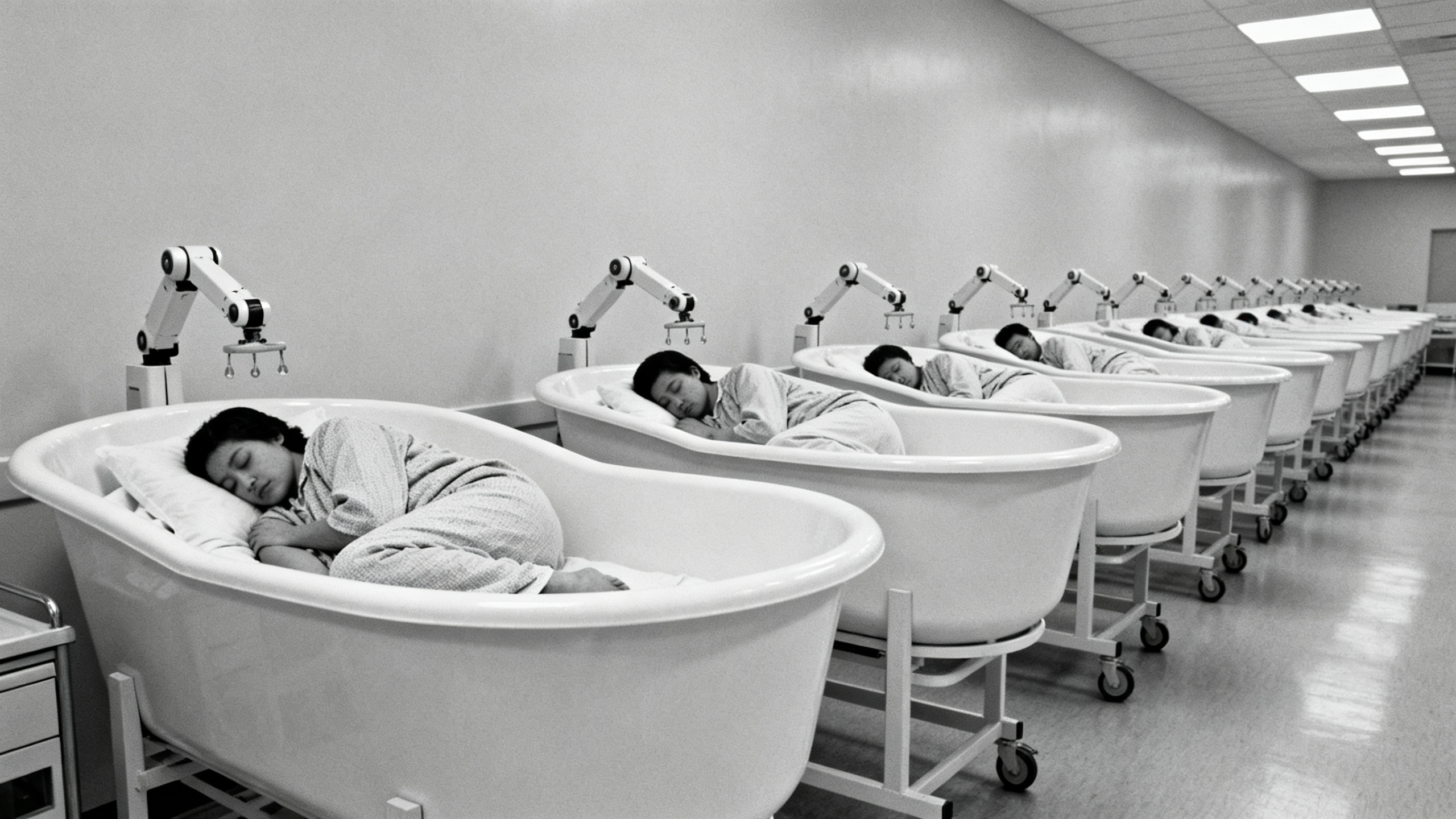
14Capito, “We Are Not Mice.” The line is the essay’s claim. The support line: Bratsberg & Rogeberg, PNAS 2018, 736,808 Norwegian men born 1962–1991; −0.33 IQ points a year between brothers for births after 1975 (0.33 × 16 ≈ 5); −0.23 a year across all families.
15Kosmyna et al., MIT Media Lab preprint 2025 (arXiv 2506.08872), n=54 in three groups of 18, session one; the search-engine group also failed 2 of 18.
16Sharma et al., Anthropic 2023 (preference training rewards agreement); Cheng et al., Science 2026. OpenAI, 29 April 2025, rollback note: the update was “overly flattering or agreeable.”
17Costello, Pennycook & Rand, Science 2024: 2,190 people who held a conspiracy belief had three rounds with GPT-4 Turbo told to argue against it with evidence; belief fell by about a fifth and stayed down at two months. Placed here as what it is: a machine that can move what people believe, and make it stick.
18Capito, “We Are Not Mice”: the speaker’s argument, condensed. The famine and rodent studies are the ones on the previous slide; “less capacity for agency” is her inference from them, not a measured result.
19Calhoun, Proc R Soc Med 1973 (“Death Squared”). Photograph: Yoichi R. Okamoto, 1970, via NLM / Commons.
20Calhoun 1973: last conceptions about day 920; 27 left at day 1,588, all past breeding age. Calhoun projected the end near day 1,780; the die-off is in Ramsden & Adams, J Soc Hist 2009.
21Mice: Calhoun 1973, population figure (four pairs; 2,200 at day 560; last conceptions about day 920; 27 survivors at day 1,588, all past breeding age; the colony then died out: Ramsden & Adams 2009). Us: World Bank, World Development Indicators, SP.DYN.TFRT.IN, world total fertility rate 5.3 in 1963, 2.2 in 2023; Statistics Korea, 2023 total fertility rate 0.72.
23Capito, this talk.
24Capito, this talk.
25Gray’s Anatomy, 1918, plate 727. Effort: Parvizi et al., Neuron 2013 (stimulating the anterior midcingulate in two patients produced a felt will to persevere); Sun et al., J Neurosci 2016 (thicker anterior cingulate in superagers). Emotion and memory: the cingulum bundle links the cingulate to the frontal lobe and the parahippocampal region. Sense of self: Raichle et al., PNAS 2001; Leech & Sharp, Brain 2014 (posterior cingulate as a default-mode hub).
26Pohle et al., R Soc Open Sci 2023: feral mink skulls show brain size recovering toward wild size over generations; selection versus upbringing not resolved.
27Woollett & Maguire, Curr Biol 2011: 39 of 79 trainees qualified; only they gained posterior hippocampal gray matter. Observational.
29Bastani et al., PNAS 2025: the GPT Base arm (answers) +48% on practice, −17% on the exam; the GPT Tutor arm (hints only) equal to the no-AI group. Kestin et al., Sci Rep 2025: 194 students, two lessons; AI tutor built to ask and withhold; more than twice the learning gain in less time, tested right after. Roediger & Karpicke, Psychol Sci 2006: a week later, rereading 40%, testing 61%.
30Fox News, March 2025 (Alpha School, Austin; the “top 2%” is the co-founder’s claim on air, not an audit; two hours a day of AI-led academics). KJZZ, 18 Dec 2024: the Arizona State Board for Charter Schools approved Unbound Academy 4–3, grades 4–8, about two hours of academics a day on IXL and Khan Academy. Euronews, 25 Feb 2025: Estonia’s AI Leap, 20,000 students in grades 10–11 and 3,000 teachers from 1 Sep 2025 (some outlets say 2,000 teachers). China Daily, 21 Oct 2025: Beijing’s 2025–27 plan, at least eight class hours of AI instruction a year from the fall 2025 term, over 1,400 schools this semester (Beijing, not all of China). AP, 11 Dec 2025: xAI and El Salvador, Grok in more than 5,000 public schools, over a million students, two years. UAE Government Media Office, 2025 (announced 4.5.2025): AI as a subject in all public schools from kindergarten to grade 12 from the 2025–26 year.
31Maier & Seligman 2016, as on slide 13: control is learned from the contingency between what you do and what follows. Applied here to the speed of feedback.
32Spoken, not on the slide: Education Endowment Foundation, Teaching and Learning Toolkit: metacognition and self-regulation, about +7 months a year, low cost.
34Capito, this talk; the definition on the slide is hers, 2026.
35Capito, this talk: augmentation within the mind’s own biology, through awareness of it; co-evolution with AI, not transhumanism.
36Several selves, stage six, telepathy: the speaker’s expectation for the decade, said as hers. O’Fallon, STAGES (Pacific Integral, 2010–2020): a developmental model of adult minds widening through stages up to a sixth. That everyone can reach the fifth, and that sixth-stage minds can be ordinary, is the speaker’s expectation. The shared line is the speaker’s reading of five maps: Kegan (The Evolving Self, 1982; In Over Our Heads, 1994: each stage makes the previous stage’s subject an object the mind can look at), Loevinger’s ego-development stages (1976), Cook-Greuter’s extension of them (1999–2013), O’Fallon’s STAGES, and Wilber’s integral theory (Sex, Ecology, Spirituality, 1995; Integral Psychology, 2000): the most developed adult minds are described as able to observe themselves in action.
37Capito, this talk.
38Star Trek (NBC, 1966–69), the original title sequence, embedded from the official Star Trek channel on YouTube; the stills under it are frames from the clip.
39Avatar: The Way of Water (20th Century Studios, 2022), the official trailer, visible 4.3–13 s, embedded from the official Avatar channel on YouTube; the stills under it are frames from the clip.
40Ramón y Cajal, Reglas y consejos sobre investigación científica (1897), tr. Advice for a Young Investigator.
41The speaker, about herself. Photo: the speaker.
42The speaker’s hinge, said as hers.
43Photo: Martin Falbisoner, Kobe Port Tower and Maritime Museum, November 2016, CC BY-SA 4.0, Wikimedia Commons. The sentence is the speaker’s.
44The speaker’s reading of the culture she works in, said as hers; the enso is the Zen circle drawn in one breath.
45ATN1 (atrophin-1) is a transcriptional co-repressor: Wang et al., Genes & Development 2006 (atrophins associate with histone deacetylases and act as nuclear-receptor corepressors; the “marks the chromatin” line). Expressed in the developing and adult brain (GeneReviews; Shen & Peterson 2009). GTEx v8: the ovary expresses ATN1 more than any of the 54 tissues sampled, above the cerebellum, which is the ovaries icon; mice without Atn1 live (IMPC knockout, fertility screen passed in both sexes), and Yu et al. 2009 is a C-terminal truncation with progressive male infertility, so no fertility claim is made. The three icons are the speaker’s summary of what the gene touches, not a map of its targets.
46GeneReviews, DRPLA: normal ATN1 alleles carry 6 to 35 CAG repeats, full penetrance at 48 or more; gnomAD v4 for the healthy distribution. Takano et al., Am J Hum Genet 1998: DRPLA in 20% of 202 Japanese families with dominant ataxia and 0% of 177 Caucasian families; a European series of 809 index patients found it in 0.25%. The percentages are shares of inherited-ataxia families, not of the world’s DRPLA patients. The drugs line: the drugs in development lower ATN1; none is approved.
47Japan DRPLA prevalence about 0.48 per 100,000, the highest reported (GeneReviews; Takano et al. 1998: 20% of 202 Japanese dominant-ataxia families); about 600 patients (MHLW intractable-disease certificates, DRPLA 7.3% of dominant families in the 2002 national series). Sanwa Kagaku Kenkyusho + Nissan Chemical, SK-2407, April 2025, seeking partners outside Japan; the sponsor’s own estimate is 800 to 1,000 patients in Japan, so 600 is the low figure.
48Cingularity is a product of Midhappening LLC (Austin, Texas; the speaker in Kobe). ATN-001 is preclinical; nothing on this slide has been tested in people.
50Essay: Capito, “We Are Not Mice.” The line under the title is from it, as are slides 14 and 28.
ImagesGray wolf, USFWS / Gary Kramer, public domain. Dairy cow, Keith Weller / USDA, public domain. Silver fox, S.V. Koval, CC BY-SA 4.0. Labrador, Rronenow, CC BY-SA 3.0. John Calhoun, Yoichi R. Okamoto, 1970, public domain. American mink, USFWS, public domain. London taxi, JLaw45, CC BY 4.0. Purkinje cells, Santiago Ramón y Cajal, public domain. Brain, Gray’s Anatomy 1918, plate 727, public domain. The adults in cribs (slide 14) are a generated image from the speaker’s own film. The mice are a generated 3D model. Clip stills are frames from each embedded clip.